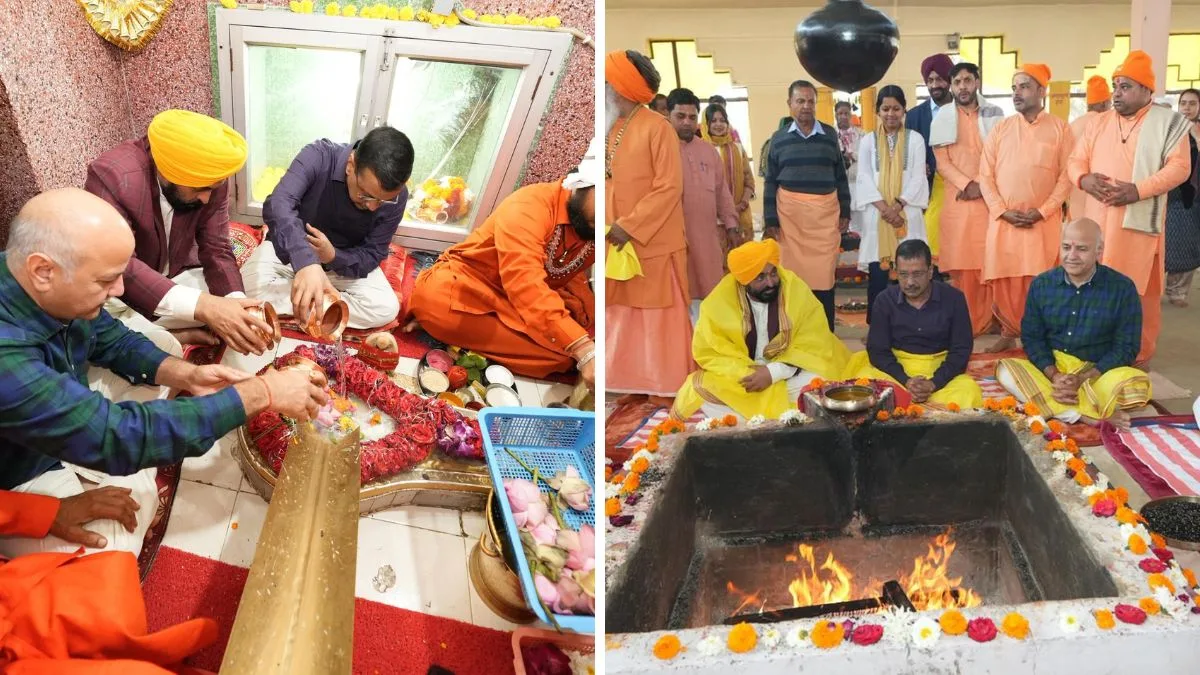
On the occasion of Maha Shivratri (February 15, 2026), Aam Aadmi Party (AAP) National Convener Arvind Kejriwal and Punjab Chief Minister Bhagwant Singh Mann paid obeisance at Sri Rankeshwar Mahadev Temple in Dhuri and performed puja at the historic Siddh Peeth, seeking peace, prosperity and progress for Punjab and the nation.
The visit, marked by religious rituals and public greetings, also saw the AAP leadership underline what they described as the civilisational and cultural importance of Maha Shivratri, while reiterating the Punjab government’s commitment to preserving the state’s spiritual heritage.
Advertisement
Leaders extend greetings and share messages on X
Sharing snippets from the puja on X, Arvind Kejriwal wrote: “On the sacred occasion of Maha Shivratri, I had the privilege of offering prayers at Shri Rankeshwar Mahadev Temple in Dhuri along with Punjab Chief Minister Bhagwant Singh Mann. The divine energy of Mahadev brings peace to the mind and renewed strength to the spirit. May Lord Bholenath’s blessings always remain upon all of you, and may the nation and Punjab continue to progress and prosper.”
Chief Minister Bhagwant Singh Mann, in his post on X, stated: “On the occasion of Maha Shivratri today, I paid obeisance and sought the blessings of Lord Shiva at Shri Rankeshwar Temple in village Ranike, constituency Dhuri, along with AAP National Convener Arvind Kejriwal and Punjab Incharge Manish Sisodia. I prayed for the prosperity of the nation, peace and harmony, and enduring brotherhood among all. May Lord Shiva’s blessings always remain upon everyone.”
In a joint statement, Arvind Kejriwal and Bhagwant Singh Mann said, “We paid obeisance at Sri Rankeshwar Mahadev temple and prayed for the peace, progress and prosperity of the state.” They further said, “On the auspicious occasion of Maha Shivratri, we performed Pooja at Siddh Peeth and extend our good wishes to all.”
Highlighting the spiritual message of the festival, they said, “Maha Shivratri inspires people to strive towards the pursuit of truth that leads to the ultimate consciousness epitomised by Lord Shiva.” They added, “The festival lays stress on the values of piety, devotion, mutual love and harmony.”
Temple’s historical and mythological significance
Speaking about Sri Rankeshwar Mahadev, the leaders said the shrine is regarded as a revered Siddh Peeth in the Malwa region. Siddh Peeths, they noted, are traditionally considered sacred sites where intense penance and spiritual practices were performed, leading to divine manifestation.
It is believed that the temple is linked to the Mahabharata period. According to tradition, Lord Shiva is believed to have appeared before Arjuna and blessed him with divine weapons, including the Gandiv Dhanush.
Describing the shrine as a symbol of Shaivite devotion in the Malwa belt, they said such places reflect “multiple layers of spiritual history” that have shaped Punjab’s cultural identity over centuries.
Government’s emphasis on preserving heritage
Chief Minister Mann reiterated that the Punjab government remains committed to preserving and promoting the state’s cultural and spiritual legacy. He cited the recent commemoration of the 350th martyrdom day of Sri Guru Teg Bahadur ji and said preparations are underway to mark the 650th parkash purab of Sri Guru Ravidass ji.
The leaders said such commemorations and annual celebrations at historic shrines help preserve them as “living heritage sites” and ensure that younger generations remain connected to Punjab’s traditions.
They concluded that Maha Shivratri symbolises spiritual awakening and self-discipline, and that celebrating it at historically significant sites reinforces the continuity of faith practices in the region.